News

Publications

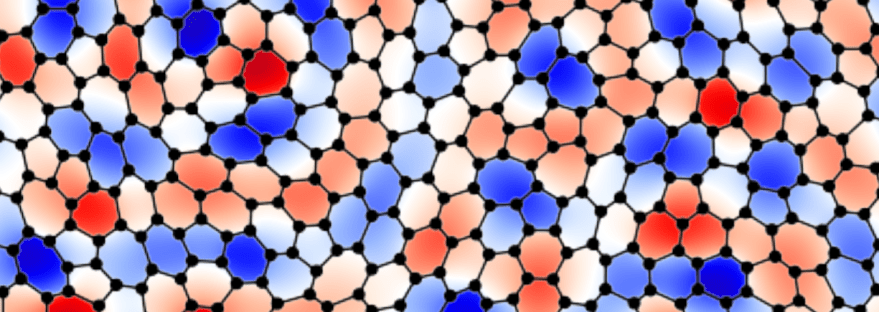
Local number fluctuations in water

Using our recently developed platform for local number fluctuations with a special focus on the higher-order moments, we analyzed density fluctuations in ordered and disordered phases of water across temperatures.
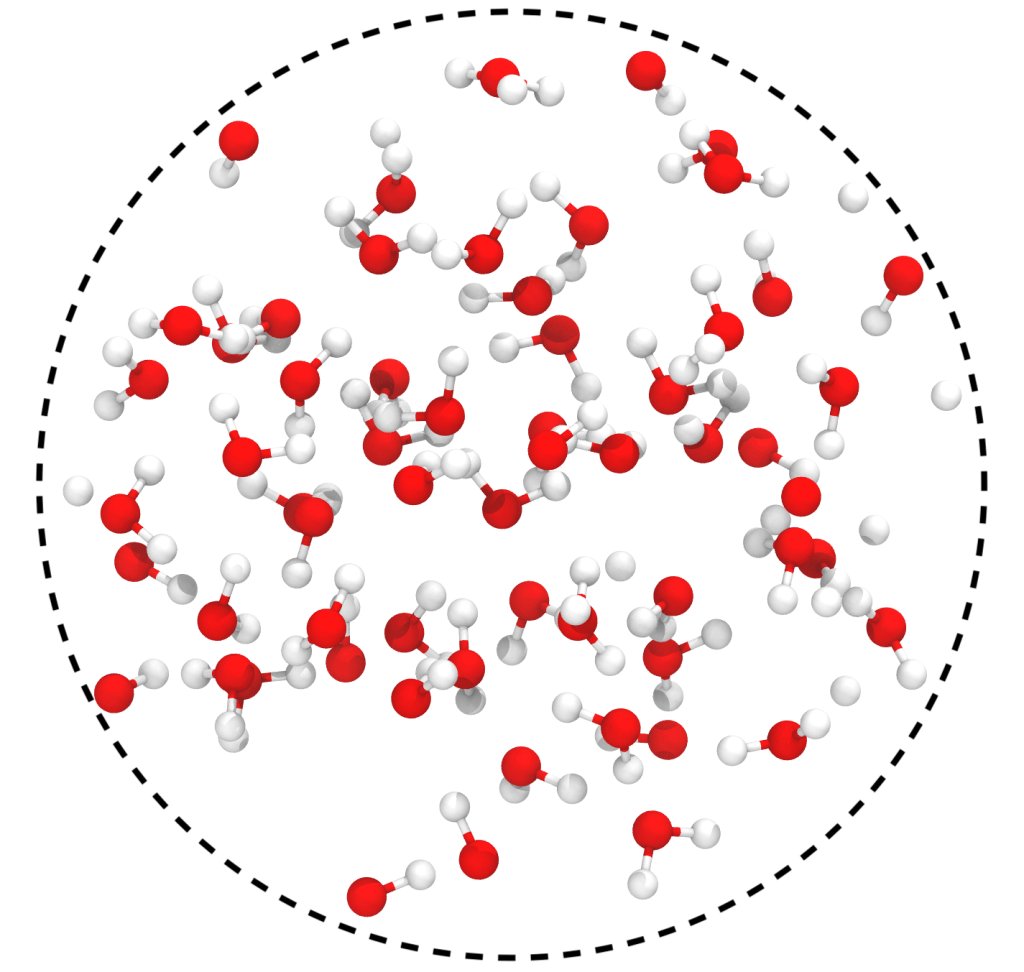
Michael A. Klatt, Jaeuk Kim, Thomas E. Gartner III, and Salvatore Torquato, Local number fluctuations in ordered and disordered phases of water across temperatures: Higher-order moments and degrees of tetrahedrality, The Journal of Chemical Physics 160, 204502 (2024).

Some anomalies of water are well-know, for example, that ice floats on
water because the crystalline ice is less dense than the disordered
liquid. These commonly known anomalies are only part of a large set
of interrelated anomalies of water in its dynamic, structural, and
thermodynamic properties.

In this work we find another anomaly in the density fluctuations of
water. Therefore, we use a recently developed platform to systematically
study local fluctuations in the number of molecules with a focus on the
higher-order moments of the distribution of these fluctuations. We apply
it to a rich variety of simulated states of water, crystalline and
disordered, in equilibrium and quenched, and for a broad range of
temperatures (from 80 K to 1600 K). What we find is yet another type of
anomaly: simply speaking, an approximation of the distribution by a
(standard) Gaussian distribution works best close to ambient conditions.
This local optimum around room temperature is probably due to a
balancing of thermal fluctuations and the tretrahedrality of water since
we observe clear signatures of tetrahedrality in the higher-order
moments. This new type of anomaly can help further studies to reveal new
links between the already known structural, dynamic, and thermodynamic
anomalies.

Publications

Patchy cell adhesion

Karin Jacobs and her group and coworkers took another close look at Staphylococcus aureus, and I could contribute with a geometric model of patchy cell adhesion.

The adhesion capability on the bacterium is not evenly distributed but rather “patchy”. Some of the characteristic features of this heterogeneous distribution can be captured by a simple geometric model that I could contribute to the paper.

https://phys.org/news/2024-01-aureus-surface-ability-evenly-cell.html

Publications

Photonic band gaps in the thermodynamic limit?

Together with Paul Steinhardt and Salvatore Torquato, I performed an intensive simulation study of the photonic band gaps of crystal and disordered networks.

Michael A. Klatt, Paul J. Steinhardt, and Salvatore Torquato, Wave propagation and band tails of two-dimensional disordered systems in the thermodynamic limit, Proceedings of the National Academy of Sciences 119, e2213633119 (2022).

Can truly isotropic networks form a complete photonic band gap? A rigorous answer requires the photonic band gap to not only open up for finite approximants, but the gap has to remain open even in the thermodynamic limit.

To address this question numerically as accurately as currently possible, we designed a two-stage ensemble approach for a sequence of increasingly large photonic network structures. Comparing different types of short- and long-range order, we found that the apparent photonic band gaps of finite samples rapidly closed with an increasing system size — except for our sufficiently stealthy hyperuniform models, in agreement with the conjecture that stealthy hyperuniformity with sufficiently high chi values is a necessary condition for photonic band gaps to persist in isotropic disordered networks in the thermodynamic limit.

Publications

Active particles “learn to swim” through hyperuniform fields

In a collaboration with Paul Monderkamp, Fabian Schwarzendahl, and Hartmut Löwen, we trained a microswimmer, in simulations, to navigate in random motility fields.

Paul A. Monderkamp, Fabian Jan Schwarzendahl, Michael A. Klatt, and Hartmut Löwen, Active particles using reinforcement learning to navigate in complex motility landscapes, Mach. Learn.: Sci. Technol. 3, 045024 (2022).

The “microswimmer” was an overdamped active Brownian particle with an additional ability to influence its orientation based on only limited, local information. The choices of the swimmer were trained using Q-learning, that is, a reinforcement learning technique, where the aim was to swim as quickly as possible across the observation window.

An important ingredient to success was to train the swimmer in a stealthy hyperuniform model. The homogeneity of this model allowed the swimmer to gradually improve its performance. Once the training was complete, the strategy immediately generalized to much more difficult models.

Publications

Strongly rigid, but hyperfluctuating

Intuitively speaking, a point pattern is said to be strongly rigid if the boundary conditions fix the positions of all the points. As the name indicates, it is a strong property. For some time, it was believed that any rigid point pattern was hyperuniform. Together with Günter Last, I disproved this conjecture by providing a counter example that is stationary and ergodic.

Michael Andreas Klatt and Günter Last, On strongly rigid hyperfluctuating random measures, Journal of Applied Probability 59, 948–961 (2022).

Therefore, we studied hyperplane intersection processes (HIPs). These point patterns are formed by the vertices of random hyperplanes. These HIPs are known to be hyperfluctuating, that is, the variance of the number of points in an observation window grows faster than the size of the window, which is the opposite of hyperuniformity.

Nevertheless, these point patterns exhibit a particularly strong form of rigidity. Even exponentially small set around the observation window suffices to reconstruct the position of all points inside the window.

Publications

Photonic network solids exhibit surprising universal behavior

Together with Paul Steinhardt and Salvatore Torquato, I performed an intensive simulation study of the photonic band gaps of crystal and disordered networks. Our surprising discovering has now been published in Physical Review Letters.

M. A. Klatt, P. J. Steinhardt, S. Torquato. Gap Sensitivity Reveals Universal Behaviors in Optimized Photonic Crystal and Disordered Networks. Phys. Rev. Lett. 127:037401-1–6 (2021).

Photonic solids possessing large complete band gaps that block light waves in all directions and polarizations for a range of frequencies are key characteristics in photonic devices because they act as semiconductors for light. One of the computational challenges is finding the largest band gap possible for a given symmetry and structure type, e.g., a three-dimensional heterostructure in the form of a network of high dielectric material. The problem is inherently nonlinear, time-consuming to compute numerically, and requires many repetitions in order to optimize over the numerous network parameters (such as the network rod radius and the dielectric constant of the material). Hence, it is both surprising and of great practical use to discover universal behaviors shared by a wide class of photonics solids, as is identified in this Letter for the case of network solids, since it greatly reduces the computations needed to find optimal structures. In particular, we have identified a quantity called the gap-sensitivity (a measure of how much the optimal band gap changes with dielectric constant) that is to good approximation the same for a wide range of crystal networks and, for high dielectric constants, the same for a wide range of disordered networks. Even more specifically, the universal behavior of the gap sensitivity for these three-dimensional networks is well described by the analytic formula for an optimal solid composed of a periodic stack of alternating planar slabs of different dielectrics. As a result, given a new network, one only has to compute the band gap at a single value of the dielectric constant to predict the optimal band gap for all values. A deeper understanding of the simplicity of this universal behavior may provide fundamental insights about PBG formation and guidance in the design of novel photonic heterostructures.

Photonic crystal networks: the crystal diamond network (left) and a nearly-hyperuniform network (right).

The Supplemental Videos also show how the band structure plots change with the dielectric contrast.

Publications

Predicting flow through porous media via pore-space descriptors

Together with Robert Ziff and Salvatore Torquato, I determined the void percolation thresholds around hard and overlapping sphere models, including MRJ sphere packings and our amorphous inherent structures of the quantizer energy. The latter have a remarkably low critical porosity.

M. A. Klatt, R. M. Ziff, S. Torquato. Critical pore radius and transport properties of disordered hard- and overlapping-sphere models. Phys. Rev. E 104:014127-1–10 (2021).

Fluid flow through porous media plays a crucial role in many applications, from groundwater hydrology to industrial filtration. Our aim is to find convenient yet reliable estimates of the fluid permeability based on the structural and topological characteristics of the complex tortuous pore space. Such predictions can facilitate the design of porous media with desirable transport properties. For porous media with a well-connected pore space, a recent study suggested the second moment of the pore-size distribution as a convenient alternative to the often-used critical pore radius, which requires a sophisticated percolation analysis. We determine both descriptors for disordered and ordered model microstructures, including maximally random jammed (MRJ) spheres, overlapping spheres, equilibrium hard spheres, quantizer configurations, and lattice packings. Interestingly. we find that the second moment of the pore-size distribution is — to a good approximation — proportional to the critical pore radius. In fact, in contrast to the latter, the former predicts the correct ranking of the permeability for our models. Moreover, we find that the hyperuniform structures, which are characterized by an anomalous suppression of volume-fraction fluctuations, tend to have lower values of the permeability, including MRJ sphere packings, quantizer configurations, and BCC sphere packings.

Publications

Local Number Fluctuations in Hyperuniform and Nonhyperuniform Systems

Our systematic study of local number fluctuations in both hyperuniform and nonhyperuniform systems has revealed some intriguing behaviors and provides useful tools for further studies:

Popular Summary by Physical Review X:
“The emerging field of ‘hyperuniformity’ provides mathematical tools for classifying large ensembles of particles based on the degree to which density fluctuations are suppressed according to their first two moments (the expected value and the variance). Originally formulated to describe how atoms are positioned in crystals, quasicrystals, and amorphous solids, the framework is useful in many studies, from the distribution of prime numbers to photoreceptor cells in avian retina. Here, we stress the importance of characterizing the higher-order moments of any system, hyperuniform or not.

To more completely characterize density fluctuations, we carry out an extensive theoretical and computational study of higher-order moments and the corresponding probability distribution function of a large class of models across the first three space dimensions. These models describe both hyperuniform and nonhyperuniform systems, that is, those in which density fluctuations are greatly suppressed and those in which they are not. Remarkably, we discover that diverse systems—encompassing the majority of our models—can be described by ‘universal’ distribution functions.

Our work elucidates the fundamental importance of higher-order structural information to fully characterize density fluctuations in many-body systems across length scales and dimensions, and thus it has broad implications for condensed-matter physics, engineering, mathematics, and biology.”

From https://link.aps.org/doi/10.1103/PhysRevX.11.021028

A few more details:
We derived rigorous bounds on higher-moments of the number distributions, beyond the number variance, and we developed a robust Gaussian “distance” metric for number distributions. We inferred the presence of three- and higher-body correlations in some of our models by the behaviors of the higher-order moments. Moreover, we showed for models that decorrelate or correlate, as the space dimension increases, that fluctuations become increasingly Gaussian or non-Gaussian, respectively. Finally, we found a universal behavior at intermediate sizes of the observation windows in that the number distributions are well approximated by gamma distributions for all of our distinctly different models that obey a CLT. For our models, we thus found that the convergence to a CLT is slower for standard nonhyperuniform models and slowest for the ‘antihyperuniform’ model studied here.

Supplementary dataset:
We have published all results of our analysis on Zenodo:
https://doi.org/10.5281/zenodo.4635977

Publications

Low-temperature statistical mechanics of the Quantizer problem

Following up on our finding of a universal hidden order in tessellations with the Quantizer energy functionals (where the cells minimize the second moment of the volume distribution) using Lloyd’s algorithm, we now compared these states with quenches from equilibrium states at finite temperature.

Upon sufficiently fast non-equilibrium cooling, the system adopts similar states as the effectively hyperuniform inherent structures found by Lloyd’s algorithm and prevents the ordering transition into a body-centered cubic ordered structure.

Publications

Hyperuniform and rigid stable matchings

With respect to the degree of order and disorder, a snapshot of the ideal gas with completely independent particle positions (in mathematics known as the realization of a Poisson point process) is the exact opposite of a lattice with a perfect short- and long-range order.

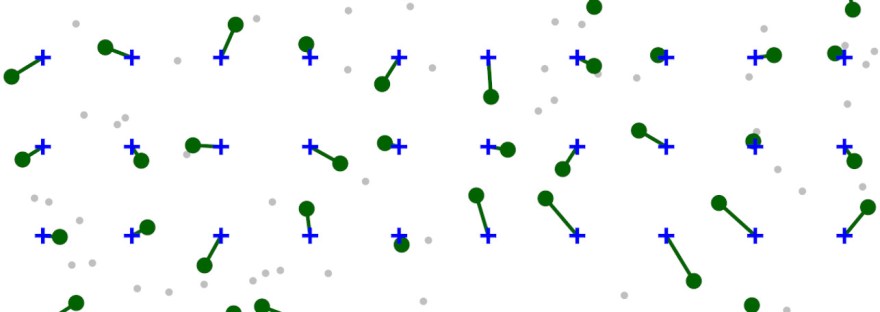
We have defined a stable matching between these two extremes and proved that the resulting pattern can locally be virtually indistinguishable from the ideal gas but at large scales it inherits two remarkable global properties of the lattice: hyperuniformity and number rigidity, as demonstrated in our supplementary video.

M. A. Klatt, G. Last, D. Yogeshwaran. Hyperuniform and rigid stable matchings. Random Struct Alg. 57:439–473 (2020)

In the stable matching, points of the lattice and the ideal gas prefer to be close to each other. Assuming that there are on average more points per unit area in the ideal gas than in the lattice, the matched points in the ideal gas form a new point process that inherits properties from both the lattice and the ideal gas.

In fact, if the mean number of points per unit area converge, the new point pattern becomes almost indistinguishable from the ideal gas in any finite observation window, while its large-scale density fluctuations remain anomalously suppressed similar to the lattice.

We prove that the resulting point process is hyperuniform and number rigidity also for a stable matching between a lattice and not only the ideal gas but a class of correlated point processes, known as determinantal point processes. For a one-sided matching in 1D, our proof applies to quite general point processes.

Our paper solves an open question from the seminal paper by Salvatore Torquato and Frank Stillinger that introduced the notion of hyperuniformity. Our matched point processes generalizes a 1D hyperuniform point process by Goldstein, Lebowitz, Speer.

You can easily match two arbitrary point patterns using my R-package: matchingpp